
The Definitive Guide to M12 Power Connectors: IEC 61076-2-111 Coding and Specifications
Next-Generation Industrial Power: High-Current M12 Interconnects
As Industry 4.0 drives the radical miniaturization of factory automation hardware, traditional, bulky heavy-duty power connectors are rapidly being phased out. Modern multi-axis robots, AGVs, and compact drive systems demand a power interface that is simultaneously space-saving, high-amperage, and environmentally sealed.
The m12 power connector standard, governed globally by the iec 61076-2-111 specification, was specifically engineered to solve this spatial and electrical puzzle. Capable of delivering up to 630V and 16A in a compact circular footprint, these ruggedized m12 power plug variants provide a fail-safe power delivery backbone for the most demanding sub-assemblies.
By standardizing specialized internal mechanical keying—known as m12 connector coding—the IEC standard guarantees that high-voltage AC lines cannot accidentally cross-mate with low-voltage DC signals, safeguarding both personnel and sensitive automation electronic components.
The Definitive IEC 61076-2-111 Coding and Engineering Selection Matrix
Selecting the correct m12 power cable and connector configuration requires a strict alignment between the hardware’s electrical loads and environmental constraints. Under-specifying contact ratings leads to catastrophic thermal runaway, while misunderstanding code boundaries compromises functional safety.
Below is the definitive engineering matrix outlining the electrical parameters, targeted operating systems, and practical hardware design deployment examples for each major M12 Power code:
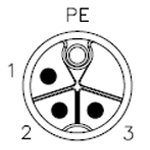
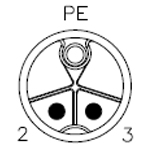
| M12 Code Front View | M12 Code | Maximum Voltage | Maximum Current | Primary Target Application | Practical Engineering Design Example |
|---|---|---|---|---|---|
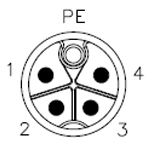 |
M12 K Code3, 4, 5 pins | 630V AC | 12A ~ 16A | Next-Gen High-Capacity AC Systems | Smart Grid & Heavy Servo Automation: Supplying primary high-voltage power to multi-axis servo controllers, green-energy power inverters, and power supply units (PSUs) within smart grid infrastructures. |
 |
|||||
 |
|||||
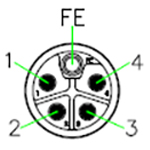 |
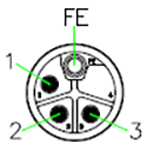
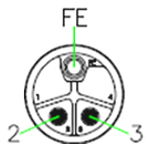
M12 L Code 3, 4, 5 pins | 63V DC | 12A ~ 16A | High-Current Smart Logistics (PROFINET Standard) | AGV/AMR Dynamic Battery & I/O Linkage: Officially mandated by PROFINET international standards. Ideal for designing charging interfaces and high-current power input blocks for Automated Guided Vehicles (AGVs), Autonomous Mobile Robots (AMRs), and heavy-duty I/O matrixes. |
 |
|||||
 |
|||||
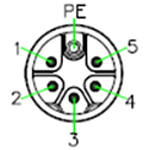 |
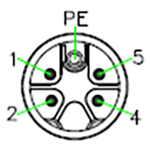
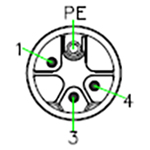
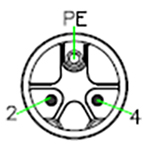
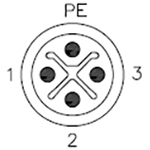
M12 M Code 3, 4, 5, 6 | 630V AC | 8A | Balanced Small-Footprint AC Systems | Balanced Multi-Axis Robotic Tooling: Designing power connection points for compact, balanced three-phase AC systems like specialized robotic welding heads, tool changers, and small-scale CNC spindle assemblies. |
 |
|||||
 |
|||||
 |
|||||
 |
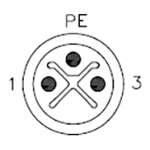
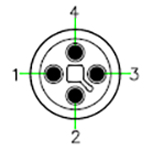
M12 S Code 3, 4 pins. | 630V AC | 12A | Three-Phase AC Power Distribution | AC Motor & VFD Interfacing: Designing power inputs for compact three-phase AC induction motors, conveyor drives, and variable frequency drives (VFDs) requiring a secure 3+PE (Protective Earth) grounding loop. |
 |
|||||
 |
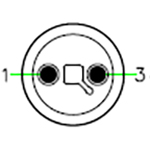
M12 T Code 2, 3, 4 pins | 63V DC | 12A | Low-Voltage DC Power Networks | Fieldbus Auxiliary Power Switching: Routing 24V/48V DC secondary power line buses to distributed I/O blocks, industrial PC enclosures, and field-level auxiliary equipment loops without signal corruption. |
|
|||||
 |
Engineering Thermal Safety and Absolute Reliability: The HOLIN Advantage
Deploying high currents through an m12 circular connector matrix introduces strict thermal management challenges. High amperage naturally increases localized resistance, generating heat that can degrade standard components. Holin-Tech mitigates these risks through advanced material science and precision manufacturing:
CNC-Machined Solid Copper Pins with 6u" Gold Plating: Unlike generic competitors utilizing cast alloys, Holin-Tech manufactures all contacts via precise CNC machining from solid copper. Heavily plated with 6u" premium gold, our pins minimize contact resistance and prevent thermal dissipation, maintaining low-temperature rises under continuous maximum loads.
100% Premium Virgin Plastics: High voltages require supreme dielectric strength. We reject recycled plastics entirely, choosing pure, virgin polymers that resist structural micro-cracking and prevent dangerous tracking currents or dielectric breakdowns over years of dynamic usage.
Hermetic Environmental Sealing (IP67/IP68): A power failure due to liquid ingress can destroy entire control systems. Every Holin-Tech m12 power female connector and m12 male power connector assembly undergoes strict hydrostatic testing, ensuring robust protection against moisture, corrosive coolants, and high-pressure chemical washdowns.
Advanced Customization: Tailoring M12 Power Connections to Your Blueprints
Holin-Tech is a premier, vertically integrated primary manufacturer capable of executing custom electromechanical configurations for global OEMs:
Hybrid Termination Protocols: We easily bridge the M12 Power standard to traditional or cabinet-internal interfaces. Our factory handles custom wire processing, allowing you to transition an m12 power plug interface into specialized internal wire-to-board housings, heavy-duty spade terminals, or localized grounding lines.
Extreme-Environment Cable Overmolding: Depending on your dynamic mechanical routing requirements, we wrap our high-current assemblies in advanced jacket materials—including high-flex, oil-resistant PUR for robot drag chains, or ultra-durable TPE for extreme outdoor thermal exposure.
Integrated Electro-Magnetic Mitigation: For power cables routed next to noisy machinery, Holin-Tech can manually wrap and integrate optimized EMI ferrite cores or continuous 360-degree shielding to isolate voltage spikes and guarantee clean power delivery.
Bring us your complex electrical schematics and physical routing challenges. Whether you require a standard overmolded m12 power cable, a specialized panel-mount retrofit, or an intricate internal cabinet wiring harness, Holin-Tech turns engineering concepts into deployable realities.
Case Studies: Transforming Industry 4.0 with M12 Power connector
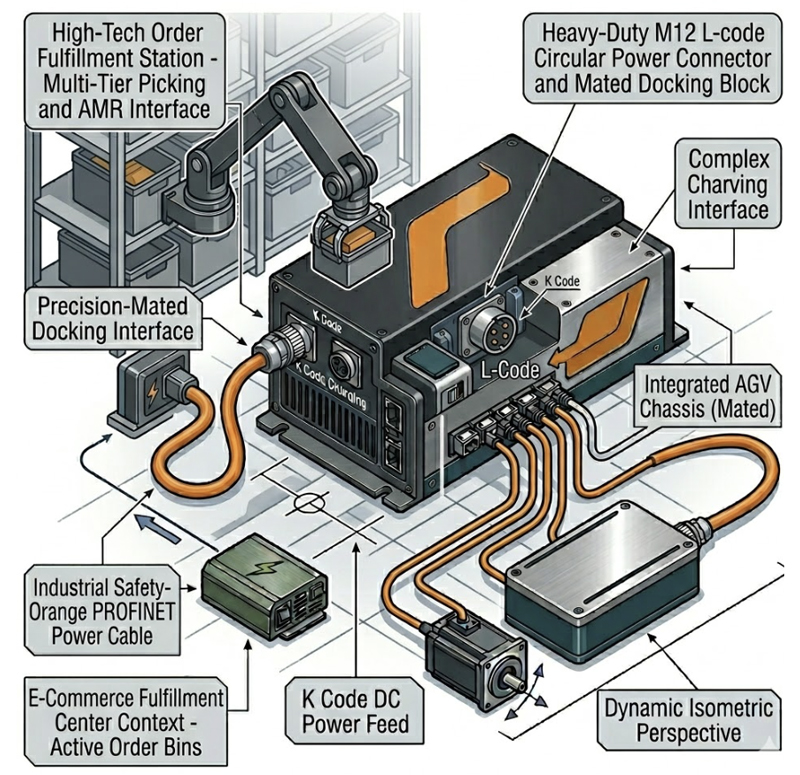
1. L-Code Case Study: Maximizing Uptime in Autonomous Mobile Robotics (Intralogistics)
The Engineering Challenge: Legacy 7/8-inch power interfaces were structurally too restrictive for the robots' downsized chassis designs. Furthermore, their non-standardized footprints triggered frequent impedance mismatches and communication dropouts across the fieldbus network.
The Deployment Solution: Hardware architects integrated low-profile M12 L-code connectors (rated at 63V DC / 16A) as the dedicated high-current power input blocks and automated battery-docking interfaces. Chosen specifically because it is the official power standard ratified by PROFINET International, this L-coded architecture reduced physical space consumption by 40% while yielding four times the current throughput of traditional signal connectors. Consequently, the AMRs executed secure rapid-charging cycles while simultaneously broadcasting critical telemetry data back to the centralized PLC over a single, unified PROFINET framework.
2. K-Code & S-Code Case Study: Decoupling Three-Phase AC Motors in Automotive Assembly Lines
The Operational Context: A tier-1 automotive manufacturing facility transitioned from centralized control cabinets to a decentralized conveyor drive topology, positioning control intelligence directly onto the active assembly floor.
The Engineering Challenge: The field-deployed three-phase AC induction motors and Variable Frequency Drives (VFDs) generated heavy electromagnetic interference (EMI). Additionally, the interconnects had to survive continuous mechanical shocks, ambient vibration, and aggressive industrial fluid splashes.
The Deployment Solution: For high-voltage AC distribution, the plant standardized overmolded M12 S-code (up to 12A/630V AC) and K-code (up to 16A/630V AC) power harnesses. The specialized 3+PE and 4+PE configurations established an uncompromised, continuous grounding path straight to the heavy machinery casings. By integrating a customized, inline EMI ferrite core alongside premium 360-degree shielding, the assembly successfully suppressed high-frequency harmonic noise radiating from the VFDs. This safeguarded adjacent low-voltage sensor lines from data corruption while maintaining a certified IP67 environmental seal.
3. T-Code Case Study: Optimizing Distributed I/O Modules in High-Moisture Beverage Processing
The Operational Context: A high-capacity liquid bottling plant required a massive sensor overhaul, scaling up its distributed fieldbus I/O matrixes and high-intensity vision inspection arrays across a washdown-heavy production zone.
The Engineering Challenge: Conventional A-coded signal lines were current-limited to 4A, causing severe voltage drops across long cable runs when attempting to power cascading strings of complex I/O modules.
The Deployment Solution: Plant engineers replaced legacy point-to-point wiring with M12 T-code power plugs (63V DC / 12A) specifically optimized for secondary DC power bus routing. This facilitated a highly efficient daisy-chain infrastructure, seamlessly delivering clean auxiliary power through high-flex PUR cables to dozens of interconnected field devices. The compact profile of the T-code housing easily bypassed narrow spatial bottlenecks within the machine frames, fully surviving daily high-pressure chemical washdowns (IP67/IP68) with zero instances of dielectric breakdown or short-circuiting.
4. M-Code Case Study: High-Density Signal & Power Integration for Precision CNC Tooling
The Operational Context: A premium CNC spindle manufacturer engineered a cutting-edge automated tool changer integrated into a multi-axis micro-robotic articulation arm.
The Engineering Challenge: The architecture demanded perfectly balanced, symmetrical three-phase AC power delivery. However, the articulated joints offered virtually zero physical clearance for traditional, bulky square terminal boxes or heavy-duty rectangular connectors.
The Deployment Solution: System architects specified the ultra-compact M12 M-code interface, utilizing its balanced 5+PE configuration rated for 8A at 630V AC. This symmetrical pin layout guaranteed uniform current distribution to the compact AC servo motors, successfully eliminating erratic mechanical harmonics and micro-vibrations. Furthermore, Holin-Tech’s specialized capacity for internal wire processing—directly transitioning the heavy-duty M-code panel receptacle into localized, low-profile wire-to-board connectors inside the unit's shell—allowed the client to achieve absolute maximum spatial economy without compromising on high-voltage electrical clearance.
"Your Blueprint, Our Manufacturing Protocol."
These international case studies prove that the industry has fully migrated to high-current M12 standardizations. At Holin-Tech, we replicate and upgrade these elite specifications. Whether your hardware layout requires complex L-code PROFINET battery harnesses, K-code smart-grid connections with integrated EMI cores, or custom wire-to-board terminal transitions, our 100% pure virgin materials and CNC-machined 6u" gold contacts ensure your custom build is engineered for zero failure. Contact our engineering desk today for a prototype evaluation.
Technical FAQ: Specifying M12 Power Coding Configurations
Q1: What is the M12 Power connector standard, and how does it prevent cross-mating?
A: The m12 power connector standard is globally governed by the iec 61076-2-111 specification, which extends the compact 12mm circular interface to handle heavy-duty power distribution. To guarantee strict functional safety, the standard defines specialized mechanical keying boundaries known as m12 connector coding (including S, T, K, and L-Code). This physical keying ensures that high-voltage AC lines can never accidentally cross-mate with low-voltage DC signals, safeguarding both system personnel and sensitive micro-electronics from catastrophic electrical overstress.
Q2: When should hardware architects specify an M12 L-Code vs. a T-Code connector for DC power?
A: Both codes are engineered for low-voltage DC networks, but they target different current thresholds and standards:
M12 L-Code (16A / 63V DC): This configuration is officially mandated by PROFINET International standards for high-current applications. It is the premier choice for designing automated battery-charging interfaces and high-power I/O blocks for Automated Guided Vehicles (AGVs) and Autonomous Mobile Robots (AMRs).
M12 T-Code (12A / 63V DC): This setup is ideal for standard auxiliary DC power bus routing and distributed fieldbus I/O modules, enabling highly efficient daisy-chain infrastructures across food processing lines or conveyor systems.
Q3: What are the differences between M12 S-Code and K-Code connectors for AC applications?
A: The distinction between these two configurations lies in their maximum current ratings and grounding contact layouts, which are critical for thermal management and electrical safety:
M12 S-Code (12A / 630V AC): Utilizing a 3+PE (Protective Earth) structure, it is the classic workhorse for three-phase AC motor distribution, conveyor drives, and variable frequency drive (VFD) interfaces.
M12 K-Code (16A / 630V AC): Featuring an advanced 4+PE layout, the K-code variant delivers higher power capacity. It is specifically optimized for next-generation smart grid infrastructures, high-voltage green-energy power inverters, and heavy-duty servo controllers.
Q4: How does a rugged M12 power plug protect industrial systems against environmental hazards and EMI?
A: A high-quality m12 power plug or m12 power female connector achieves heavy-duty reliability through advanced material science and shielding engineering. Premium variants utilize pure, virgin polymers for maximum dielectric strength and CNC-machined solid copper contacts with premium gold plating to minimize contact resistance. When mated, the connection provides hermetic IP67/IP68 environmental sealing against water, oil, and chemical washdowns. Furthermore, implementing an emi shielded cable assembly wraps the high-flex PUR/TPE lines in continuous copper braiding, blocking high-frequency harmonic noise before it can compromise adjacent data lines.
Q5: Why is migrating to an overmolded M12 power cable ideal for compact embedded systems and rugged IPCs?
A: As modern industrial PCs (IPCs) and embedded computing enclosures undergo radical miniaturization, legacy 7/8-inch power interfaces or traditional rectangular terminal blocks are structurally too bulky. Specifying an overmolded m12 power cable yields a massive 40% space reduction while maintaining high-amperage power throughput. Additionally, its metric threaded coupling mechanism provides a vibration-resistant link, making it the perfect match for harsh environment industrial pc wiring where commercial power sockets would easily fail or loosen due to continuous structural shock.